Evergreen does not mean permanent. A tutorial can remain useful while one interface changes; a comparison can age when a product disappears; a video page can still earn links even after the embedded media breaks. Updating everything from scratch feels tidy, but it can erase the exact details that made the page trustworthy.
This workflow begins with diagnosis: keep, repair, expand, merge or retire. It is written for owned video pages and accompanying articles, not for manipulating search systems. Search engines and platforms change, so the durable goal is a page that remains accessible, accurate and clear about what was updated.
Build a useful inventory
List URL, topic, original date, video availability, traffic source and known conversions. That sounds simple until a real deadline compresses the choices. The practical move is to decide what the viewer must notice, what the creator must preserve, and what can safely vary. Write those three things beside the project before changing tools or adding polish. A visible decision is easier to review than an instinct remembered after publishing.
Record backlinks, internal links and embeds before changing a public path. Test the idea on the roughest useful version, not on a finished piece that is expensive to change. Watch it once as a viewer and once as an editor. During the viewer pass, note confusion without stopping. During the editor pass, trace each confusing moment back to a shot, sentence, transition or missing piece of evidence.
Flag legal, safety or factual issues separately because they may require immediate action. There is a trade-off here. Consistency reduces effort and helps recognition, but too much consistency can hide weak thinking. Keep the part that carries meaning stable; vary the part that merely expresses it. This gives the workflow a backbone without turning every post into a duplicate of the last one.
Classify what actually aged
Separate outdated facts from weak structure, broken media and changed search intent. A common failure is to optimize the visible symptom while leaving the cause untouched. Before acting, name the audience, the job they are trying to complete and the proof they receive. If those three elements do not agree, a more attractive edit may improve appearance while making the communication less honest.
Check whether the original question still exists in the same form. Treat the result as evidence rather than a personal grade. Record what changed, the conditions around the change and what you expected to happen. That note lets you compare similar projects later without inventing a story around one unusually strong or weak result.
Avoid rewriting stable sections merely to make the page look recently edited. The checkpoint should be quick enough to survive ordinary production. If it requires a perfect studio, a large team or an hour of analysis for every post, it will disappear when work gets busy. Reduce it to a repeatable question, a visible artifact and a clear pass condition.
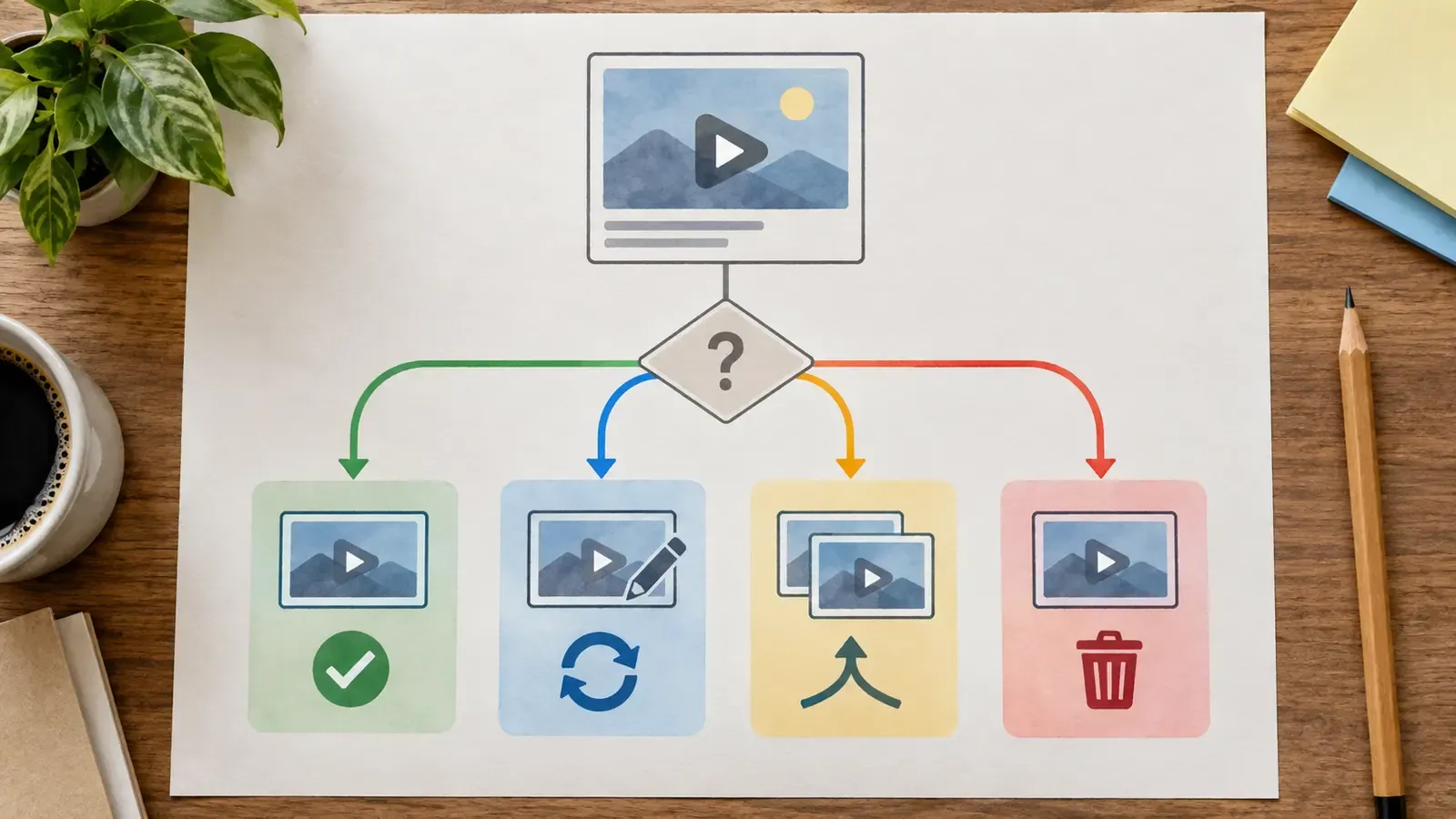
Choose keep, update, merge or retire
Keep pages that remain accurate and useful even if they are not new. Ask a second person to explain what they think the piece promises before you tell them your intention. Their wording is useful even when you disagree. It reveals what the material communicates without the creator's private context, which is exactly the gap that viewers face.
Update when the same intent persists but facts, examples or media need correction. That sounds simple until a real deadline compresses the choices. The practical move is to decide what the viewer must notice, what the creator must preserve, and what can safely vary. Write those three things beside the project before changing tools or adding polish. A visible decision is easier to review than an instinct remembered after publishing.
Merge overlapping pages only when one stronger destination can satisfy both without losing necessary nuance. Test the idea on the roughest useful version, not on a finished piece that is expensive to change. Watch it once as a viewer and once as an editor. During the viewer pass, note confusion without stopping. During the editor pass, trace each confusing moment back to a shot, sentence, transition or missing piece of evidence.
Preserve the useful URL
Prefer updating the established page when its intent and destination remain valid. There is a trade-off here. Consistency reduces effort and helps recognition, but too much consistency can hide weak thinking. Keep the part that carries meaning stable; vary the part that merely expresses it. This gives the workflow a backbone without turning every post into a duplicate of the last one.
Map redirects deliberately when consolidation is necessary and avoid chains. A common failure is to optimize the visible symptom while leaving the cause untouched. Before acting, name the audience, the job they are trying to complete and the proof they receive. If those three elements do not agree, a more attractive edit may improve appearance while making the communication less honest.
Retain dated context that helps readers understand why an older method changed. Treat the result as evidence rather than a personal grade. Record what changed, the conditions around the change and what you expected to happen. That note lets you compare similar projects later without inventing a story around one unusually strong or weak result.
Update the video and page together
Decide whether the existing video can be corrected with surrounding text or needs a new version. The checkpoint should be quick enough to survive ordinary production. If it requires a perfect studio, a large team or an hour of analysis for every post, it will disappear when work gets busy. Reduce it to a repeatable question, a visible artifact and a clear pass condition.
Align title, description, transcript, structured data and visible copy with the current asset. Ask a second person to explain what they think the piece promises before you tell them your intention. Their wording is useful even when you disagree. It reveals what the material communicates without the creator's private context, which is exactly the gap that viewers face.
Keep the video prominent on pages whose primary purpose is watching it. That sounds simple until a real deadline compresses the choices. The practical move is to decide what the viewer must notice, what the creator must preserve, and what can safely vary. Write those three things beside the project before changing tools or adding polish. A visible decision is easier to review than an instinct remembered after publishing.
Verify discoverability basics
Confirm the page and video resources are crawlable where public indexing is intended. Test the idea on the roughest useful version, not on a finished piece that is expensive to change. Watch it once as a viewer and once as an editor. During the viewer pass, note confusion without stopping. During the editor pass, trace each confusing moment back to a shot, sentence, transition or missing piece of evidence.
Use accurate thumbnails, stable embed information and relevant structured data supported by the site. There is a trade-off here. Consistency reduces effort and helps recognition, but too much consistency can hide weak thinking. Keep the part that carries meaning stable; vary the part that merely expresses it. This gives the workflow a backbone without turning every post into a duplicate of the last one.
Check mobile playback, captions and key sections after deployment. A common failure is to optimize the visible symptom while leaving the cause untouched. Before acting, name the audience, the job they are trying to complete and the proof they receive. If those three elements do not agree, a more attractive edit may improve appearance while making the communication less honest.
| Check | What to inspect |
|---|---|
| 1 | Confirm the page and video resources are crawlable where public indexing is intended. |
| 2 | Use accurate thumbnails, stable embed information and relevant structured data supported by the site. |
| 3 | Check mobile playback, captions and key sections after deployment. |
Publish transparent updates
Add a clear reviewed or updated date when meaningful changes were made. Treat the result as evidence rather than a personal grade. Record what changed, the conditions around the change and what you expected to happen. That note lets you compare similar projects later without inventing a story around one unusually strong or weak result.
Explain material corrections instead of silently preserving a misleading impression. The checkpoint should be quick enough to survive ordinary production. If it requires a perfect studio, a large team or an hour of analysis for every post, it will disappear when work gets busy. Reduce it to a repeatable question, a visible artifact and a clear pass condition.
Avoid changing the date when the substance did not change. Ask a second person to explain what they think the piece promises before you tell them your intention. Their wording is useful even when you disagree. It reveals what the material communicates without the creator's private context, which is exactly the gap that viewers face.
Measure after the refresh
Annotate the release so traffic and engagement changes have context. That sounds simple until a real deadline compresses the choices. The practical move is to decide what the viewer must notice, what the creator must preserve, and what can safely vary. Write those three things beside the project before changing tools or adding polish. A visible decision is easier to review than an instinct remembered after publishing.
Watch for broken referrals, unexpected query shifts and viewer confusion. Test the idea on the roughest useful version, not on a finished piece that is expensive to change. Watch it once as a viewer and once as an editor. During the viewer pass, note confusion without stopping. During the editor pass, trace each confusing moment back to a shot, sentence, transition or missing piece of evidence.
Allow enough time for discovery systems to process the update before drawing conclusions. There is a trade-off here. Consistency reduces effort and helps recognition, but too much consistency can hide weak thinking. Keep the part that carries meaning stable; vary the part that merely expresses it. This gives the workflow a backbone without turning every post into a duplicate of the last one.
Illustrative case study: the repair tutorial with a dead embed
A small publisher finds an old appliance-repair page that still receives search visits. The written steps are mostly accurate, but the video host changed and the embed fails. A rushed editor proposes a new URL because the page looks old. The inventory reveals that several community forums link directly to the existing address.
The team keeps the URL, replaces the owned video, updates two safety notes, adds reviewed captions and checks that the media file can be fetched where intended. The old comments that describe a previous model remain visible with dated context. A note explains what changed rather than pretending the page was newly created.
This is a realistic maintenance decision without invented traffic gains. The value came from preserving the useful destination while repairing the experience. Had the underlying instructions become unsafe or the intent changed completely, a replacement or retirement would have been the more responsible choice.
Keep a working record
A lightweight record makes this process teachable. Save the brief, first draft, decisive changes, permissions or source notes, final export and one paragraph about the outcome. For creators and publishers maintaining older videos that still attract search traffic, that record is more valuable than a folder full of unnamed versions because it shows why a choice was made.
Keep rejected options too, especially when they looked attractive but weakened the audience promise, exceeded the budget or created a rights problem. A short reason is enough. Over several projects, these notes reveal recurring friction and help separate a workflow problem from a one-off production accident.
Review the record after the agreed observation window. Mark what you know, what remains uncertain and what deserves another test. Do not rewrite the original hypothesis to make the outcome seem predictable. Honest notes protect the usefulness of both successful and disappointing work.
Choose the next useful step
Apply the framework to one active project before expanding it into a larger system. The first pass should expose a concrete decision, not create more administration. Read Film Searchable Short-Form Tutorials That Answer One Question Well. Read MP4, WebM, MOV and Codecs: A Creator’s Export Decision Guide. Browse the AnyVid.io blog for related creator education. When reference media is involved, use only media you created, own, or have permission or another lawful right to save.
Frequently asked questions
How often should evergreen video pages be reviewed?
Base the cadence on risk and rate of change. Safety, financial, legal or rapidly changing software guidance needs closer review than a stable craft demonstration. Maintain an inventory with a next-review date instead of applying one arbitrary schedule to everything.
Should I change the publication date after an update?
Use a visible updated or reviewed date when the substance changed, and retain the original publication context where useful. Do not change dates merely to appear fresh. The page should help readers understand what was reviewed and when.
When should two video pages be merged?
Merge when they substantially satisfy the same intent and one destination can preserve the useful material. Map internal links, backlinks, redirects, media and structured data first. Do not merge distinct audiences simply because titles share a keyword.
Can I keep an old video and update only the article?
Sometimes. If the video remains accurate and the page can clearly supply changed context, that may be enough. Replace or correct the media when the visual instructions themselves are wrong, unsafe or central to the page’s promise.
What should happen to a retired page?
Choose based on why it is retired and whether a meaningful replacement exists. A relevant redirect may suit consolidation; a clear unavailable or archived state may be more honest when no equivalent exists. Avoid sending every retired URL to an unrelated homepage.
Was this article helpful?
Tell us what worked so we can improve future content.