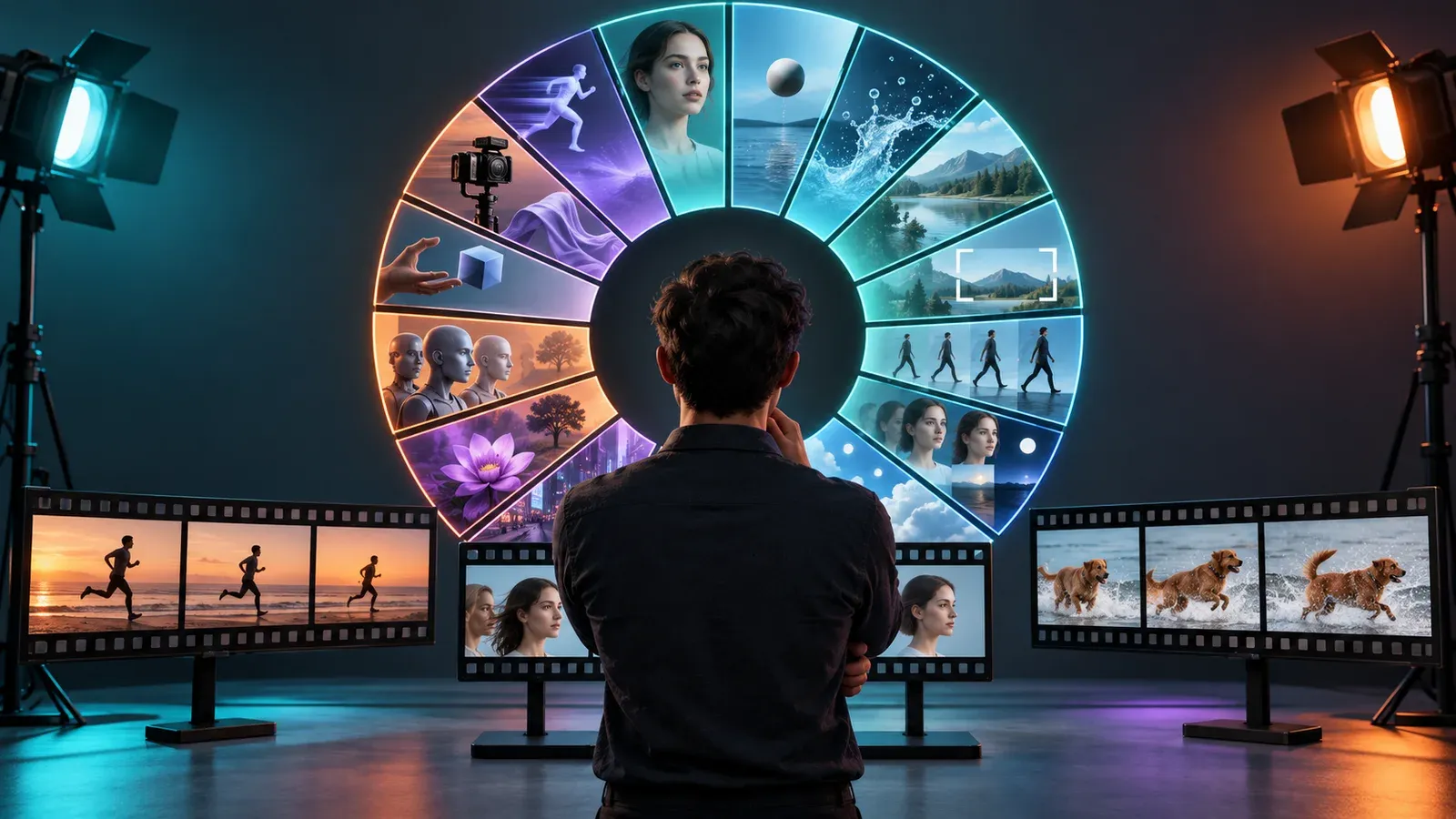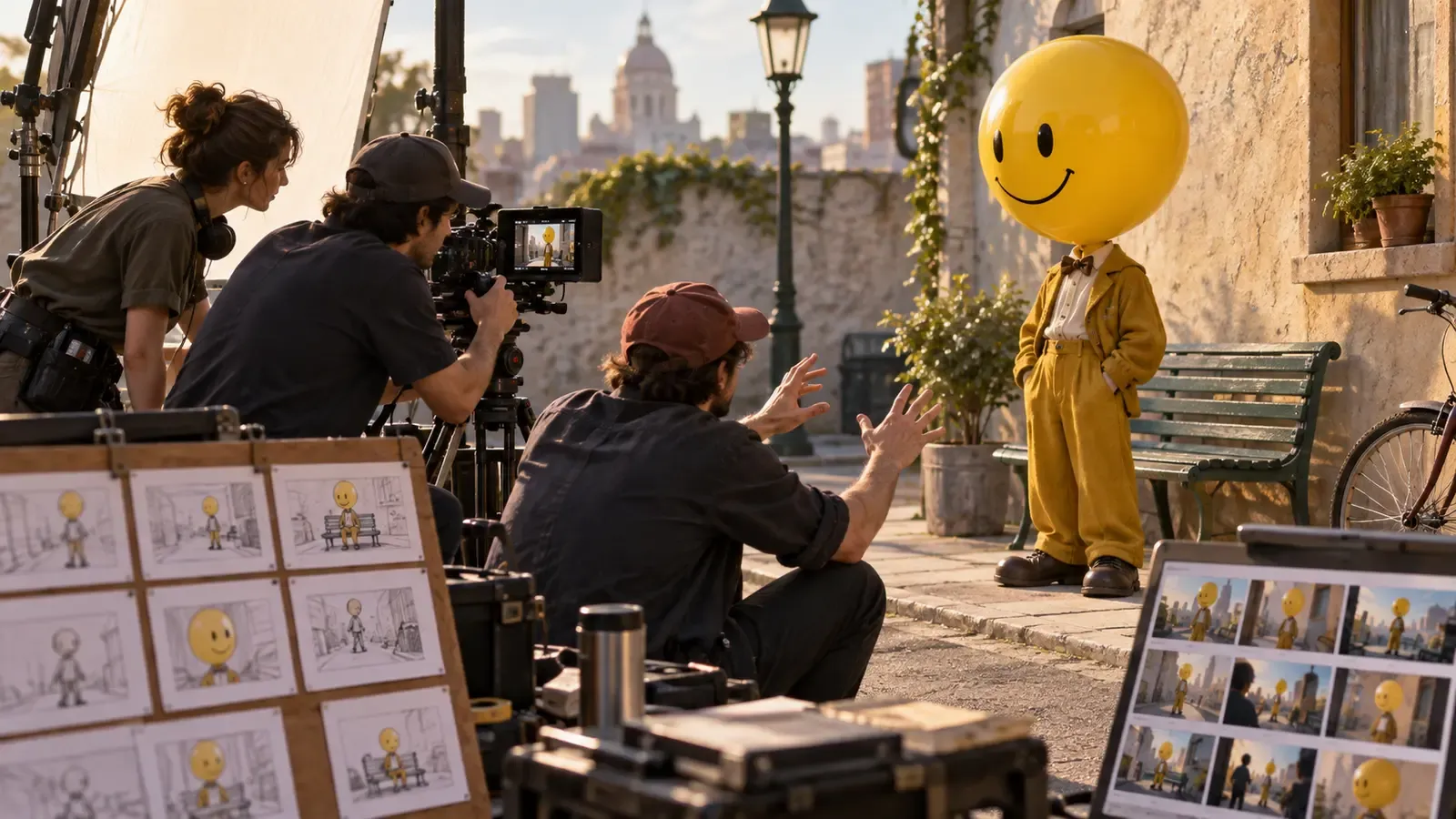
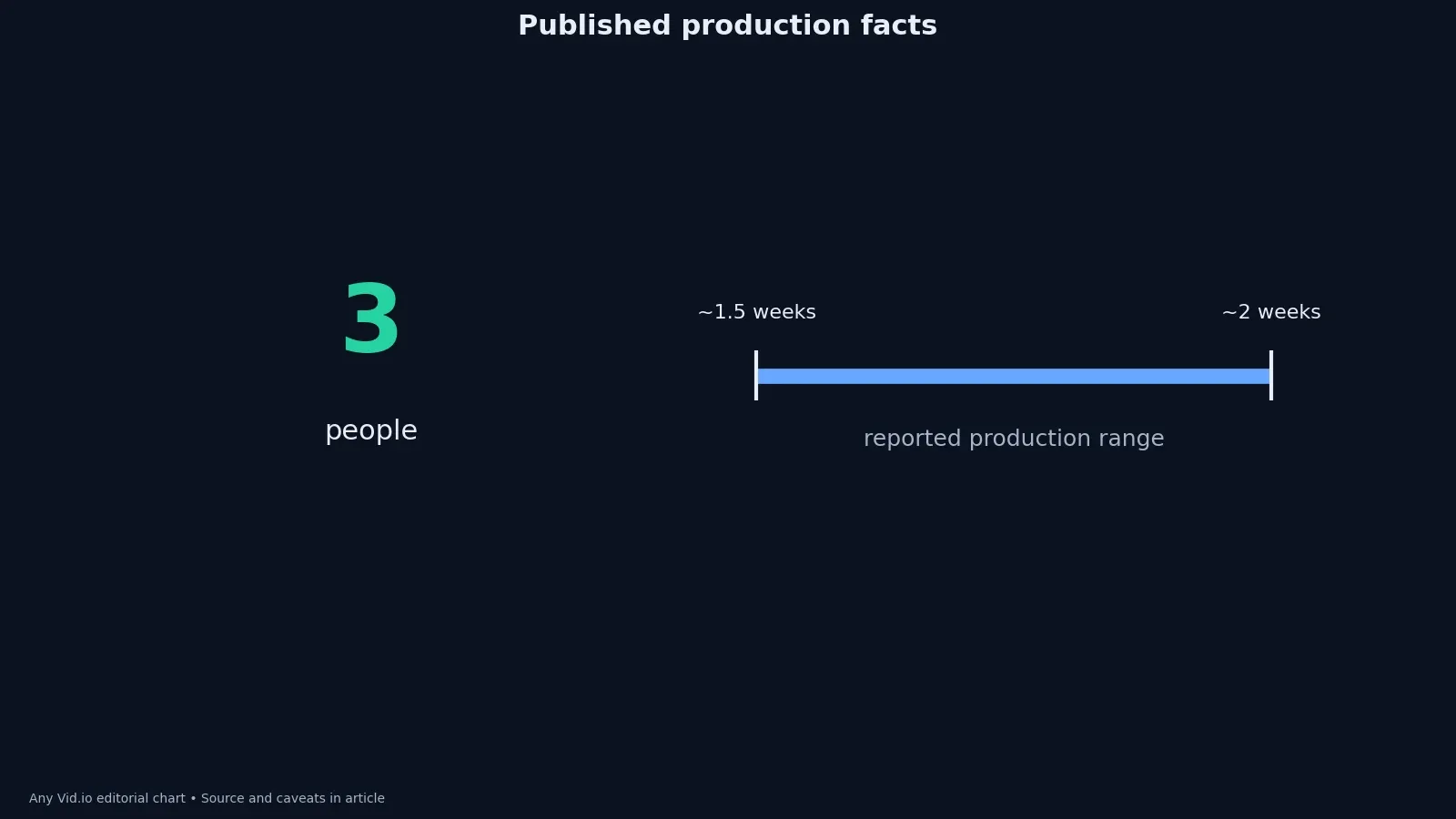
The short film *Air Head* mattered less because a balloon-headed character looked novel than because the production team spoke openly about control. Trade publication fxguide reported that Toronto production company shy kids made the piece with a team of three in roughly one and a half to two weeks using early access to OpenAI’s Sora, then shaped the material through conventional filmmaking decisions.
This is not a current product review. Early-access capabilities, limits and interfaces can differ radically from tools available in 2026, by region and plan. The case is valuable as a workflow artifact: prompts produced candidate footage, while humans wrote, directed, selected, edited, timed and built sound. The missing numbers—generation count, compute, exact labor hours and discarded clips—are as important as the published facts.
Separate published facts from production mystique
Keep the documented team size and approximate production range while refusing to invent generation counts or a cost comparison. Treat the chart as a map of the published evidence, not a forecast. It compresses the reported values so patterns are easier to see, but it does not add precision the source never supplied. Thresholds such as ‘more than’ or ‘fewer than’ remain thresholds, and indexed pages, clicks, traffic and engagement must not be silently treated as the same outcome.
Describe the model as one production input rather than the author of every story, pacing and sound decision. Before generalizing, ask what else changed at the same time. A creator may alter cadence, subject, collaboration and presentation together; a publisher may add markup while fixing indexing; a production may combine generation with conventional editing. The honest conclusion is often that the workflow bundle worked under observed conditions, while the contribution of each part remains unknown.
Date the case clearly because early Sora access does not document current availability or performance. The next test should be cheaper than the story that inspired it. Use existing footage, a limited archive, a single sponsor brief or a short run of posts. Decide in advance what would make you stop, continue or revise. Pre-committing to those choices reduces the temptation to explain every noisy result as proof that the idea was right.
Treat generated clips as coverage
Write the dramatic beat and required continuity before asking for visual variants. Finally, preserve editorial judgment. Data can expose a pattern and a case can demonstrate feasibility, but neither can decide what is responsible for your audience, sustainable for your capacity or consistent with your voice. The creator still owns that decision—and should be able to explain it without hiding behind an algorithm or a benchmark.
Generate for a specific editorial job—establishing shot, reaction, transition or insert—rather than collecting attractive motion. The important distinction is between what the record establishes and what an editor might infer. A published outcome can show that a particular team changed a particular system; it cannot prove that copying one visible tactic will reproduce the number. Use the evidence to choose a test, then measure that test against your own baseline.
Log prompt, seed or settings when available, output, defect and intended timeline position. In practice, turn that observation into a written decision before opening the camera or editor. Name the audience question, the asset that will answer it, and the signal that would justify keeping the change. This keeps a striking result from becoming a vague command to ‘do more’ and gives collaborators something concrete to challenge.
Direct around inconsistency
Choose framing and duration that reduce continuity demands when character identity or physics drifts. The failure mode is easy to recognize: the headline number survives while the conditions disappear. Sample size, time window, content library, distribution surface and measurement definition all shape the result. Keep those conditions beside the metric in the project notes, especially when the source is a platform, vendor or company describing its own success.
Cut on movement, sound or story logic instead of forcing two incompatible clips into a seamless match. A small creator can still use the lesson without imitating the scale. Reduce the operation to one page, one video family or one campaign. Establish the current state, change one coherent bundle of decisions, and wait long enough for the relevant behavior to occur. If several variables move together, describe the result as a package rather than crediting a favorite detail.
Use conventional compositing, cleanup or practical inserts only with appropriate rights and honest production records. Success should be visible in the work as well as the dashboard. A cleaner page should be easier to inspect; a stronger disclosure should be harder to miss; a better edit should answer the viewer sooner. When a metric rises but the audience experience becomes less accurate or less accessible, the experiment has found a trade-off, not an uncomplicated win.
Budget for selection, not just generation
Review candidate clips at full speed and frame by frame for anatomy, object persistence, unintended symbols and unstable backgrounds. Document the unsuccessful pass too. Rejected versions show which constraints mattered and stop the team from repeating an attractive mistake six weeks later. A useful record needs the date, source material, decision owner, changed element, observation window and one sentence about uncertainty. That is enough structure for learning without building a bureaucracy.
Reject a visually exciting shot when it damages story geography or introduces a rights or safety concern. Treat the chart as a map of the published evidence, not a forecast. It compresses the reported values so patterns are easier to see, but it does not add precision the source never supplied. Thresholds such as ‘more than’ or ‘fewer than’ remain thresholds, and indexed pages, clicks, traffic and engagement must not be silently treated as the same outcome.
Track selection time because generation speed can move labor into review rather than eliminate it. Before generalizing, ask what else changed at the same time. A creator may alter cadence, subject, collaboration and presentation together; a publisher may add markup while fixing indexing; a production may combine generation with conventional editing. The honest conclusion is often that the workflow bundle worked under observed conditions, while the contribution of each part remains unknown.
Use sound to create continuity
Record or license voice, effects and music with clear rights rather than assuming generated pictures solve the soundtrack. The next test should be cheaper than the story that inspired it. Use existing footage, a limited archive, a single sponsor brief or a short run of posts. Decide in advance what would make you stop, continue or revise. Pre-committing to those choices reduces the temptation to explain every noisy result as proof that the idea was right.
Use room tone, perspective and recurring motifs to connect shots that vary visually. Finally, preserve editorial judgment. Data can expose a pattern and a case can demonstrate feasibility, but neither can decide what is responsible for your audience, sustainable for your capacity or consistent with your voice. The creator still owns that decision—and should be able to explain it without hiding behind an algorithm or a benchmark.
Review lip synchronization and implied speech carefully; do not fabricate a real person’s endorsement or identity. The important distinction is between what the record establishes and what an editor might infer. A published outcome can show that a particular team changed a particular system; it cannot prove that copying one visible tactic will reproduce the number. Use the evidence to choose a test, then measure that test against your own baseline.
Disclose and preserve provenance
State materially relevant AI use in credits or accompanying context without turning the disclosure into promotional theater. In practice, turn that observation into a written decision before opening the camera or editor. Name the audience question, the asset that will answer it, and the signal that would justify keeping the change. This keeps a striking result from becoming a vague command to ‘do more’ and gives collaborators something concrete to challenge.
Keep source media, permissions, model/version notes and human edit decisions with the project archive. The failure mode is easy to recognize: the headline number survives while the conditions disappear. Sample size, time window, content library, distribution surface and measurement definition all shape the result. Keep those conditions beside the metric in the project notes, especially when the source is a platform, vendor or company describing its own success.
Follow current platform labeling requirements because rules can differ by service, region and rollout. A small creator can still use the lesson without imitating the scale. Reduce the operation to one page, one video family or one campaign. Establish the current state, change one coherent bundle of decisions, and wait long enough for the relevant behavior to occur. If several variables move together, describe the result as a package rather than crediting a favorite detail.
Design a small creator pilot
Limit the pilot to six shots and one character so the review burden is visible. Success should be visible in the work as well as the dashboard. A cleaner page should be easier to inspect; a stronger disclosure should be harder to miss; a better edit should answer the viewer sooner. When a metric rises but the audience experience becomes less accurate or less accessible, the experiment has found a trade-off, not an uncomplicated win.
Compare a conventional, hybrid and generated approach on time, usable-shot rate, continuity and rights confidence. Document the unsuccessful pass too. Rejected versions show which constraints mattered and stop the team from repeating an attractive mistake six weeks later. A useful record needs the date, source material, decision owner, changed element, observation window and one sentence about uncertainty. That is enough structure for learning without building a bureaucracy.
Do not publish synthetic depictions of real people without consent and a sound lawful basis. Treat the chart as a map of the published evidence, not a forecast. It compresses the reported values so patterns are easier to see, but it does not add precision the source never supplied. Thresholds such as ‘more than’ or ‘fewer than’ remain thresholds, and indexed pages, clicks, traffic and engagement must not be silently treated as the same outcome.
Judge what the case demonstrates
The project demonstrates that a small team could finish a distinctive short with early access and post-production craft. Before generalizing, ask what else changed at the same time. A creator may alter cadence, subject, collaboration and presentation together; a publisher may add markup while fixing indexing; a production may combine generation with conventional editing. The honest conclusion is often that the workflow bundle worked under observed conditions, while the contribution of each part remains unknown.
It does not prove AI video is cheaper, faster or suitable for every creator because cost and discarded-output data were not published. The next test should be cheaper than the story that inspired it. Use existing footage, a limited archive, a single sponsor brief or a short run of posts. Decide in advance what would make you stop, continue or revise. Pre-committing to those choices reduces the temptation to explain every noisy result as proof that the idea was right.
Its strongest lesson is that direction becomes more important when raw images are easier to produce. Finally, preserve editorial judgment. Data can expose a pattern and a case can demonstrate feasibility, but neither can decide what is responsible for your audience, sustainable for your capacity or consistent with your voice. The creator still owns that decision—and should be able to explain it without hiding behind an algorithm or a benchmark.
Evidence table
| Evidence item | Published information | Still unknown |
|---|---|---|
| Team | 3 people | Full division of labor and outside support |
| Production time | About 1.5–2 weeks | Exact hours and iteration schedule |
| Generation volume | Not published | Usable-shot rate and rejected outputs |
| Cost comparison | Not published | Tool, compute and post-production costs |
This evidence table for Inside “Air Head”: What a Three-Person AI Film Reveals About Production is deliberately compact. It preserves the unit and limitation beside each result so the number cannot wander into a slide deck as an unsupported universal benchmark. For a working analysis, add the date you accessed the source and the exact metric definition used in your own account.
Source and method
This case study relies on fxguide: Actually using SORA. The chart redraws only values stated by that source or transparent transformations described in its caption. No private dashboard data, invented survey, simulated outcome or scraped personal information is presented as fact.
For this AI Video Production analysis, any interest held by a platform or company reporting its own result is named; academic designs and dates remain visible. The source link lets readers inspect the original wording, while current feature or legal questions should still be checked against current primary guidance before action.
Apply the case without copying it
Choose one bounded project and write a baseline before making changes. Preserve the case’s logic—clear variables, visible evidence and honest limitations—without imitating its scale or headline outcome. Read A Responsible AI Video Workflow From Prompt to Disclosure. Read Keep Characters Consistent Across AI-Generated Video Shots. Read Shoot B-Roll Alone With a Six-Shot Coverage System.
Review the AI Video Production result with the people who make and use the content. Keep what improves clarity, trust or sustainable production; revise what merely chases the published number. Browse the AnyVid.io blog for more creator workflows. When archiving reference media, use only media you created, own, or have permission or another lawful right to save.
Frequently asked questions
Was Air Head made only by AI?
No. The case is best understood as a hybrid production. Generated footage was shaped by human writing, direction, selection, editing, timing and sound work. Describing it as a one-click film erases the decisions that made the piece coherent.
Does the two-week range prove AI filmmaking is faster?
No. The reported range describes one early-access production with a three-person team. Without a comparable conventional version, exact labor hours, generation volume and costs, it cannot establish a general speed advantage.
Why chart only team size and time?
Those are among the few quantitative production facts reported by a reputable trade source. Inventing prompt counts, rendering hours or cost savings would make the graphic look richer while making the case less truthful.
How should creators disclose AI-generated video?
Use clear language appropriate to the material, audience and platform, and follow current service rules. Preserve model/version and edit records. Synthetic depictions of real people, sensitive events or endorsements deserve especially explicit context and consent.
What should a first AI-video pilot measure?
Track total labor, number of candidate clips, usable-shot rate, continuity defects, cleanup time, rights confidence and audience understanding. Compare the finished story, not merely the speed of the first generation.
Was this article helpful?
Tell us what worked so we can improve future content.