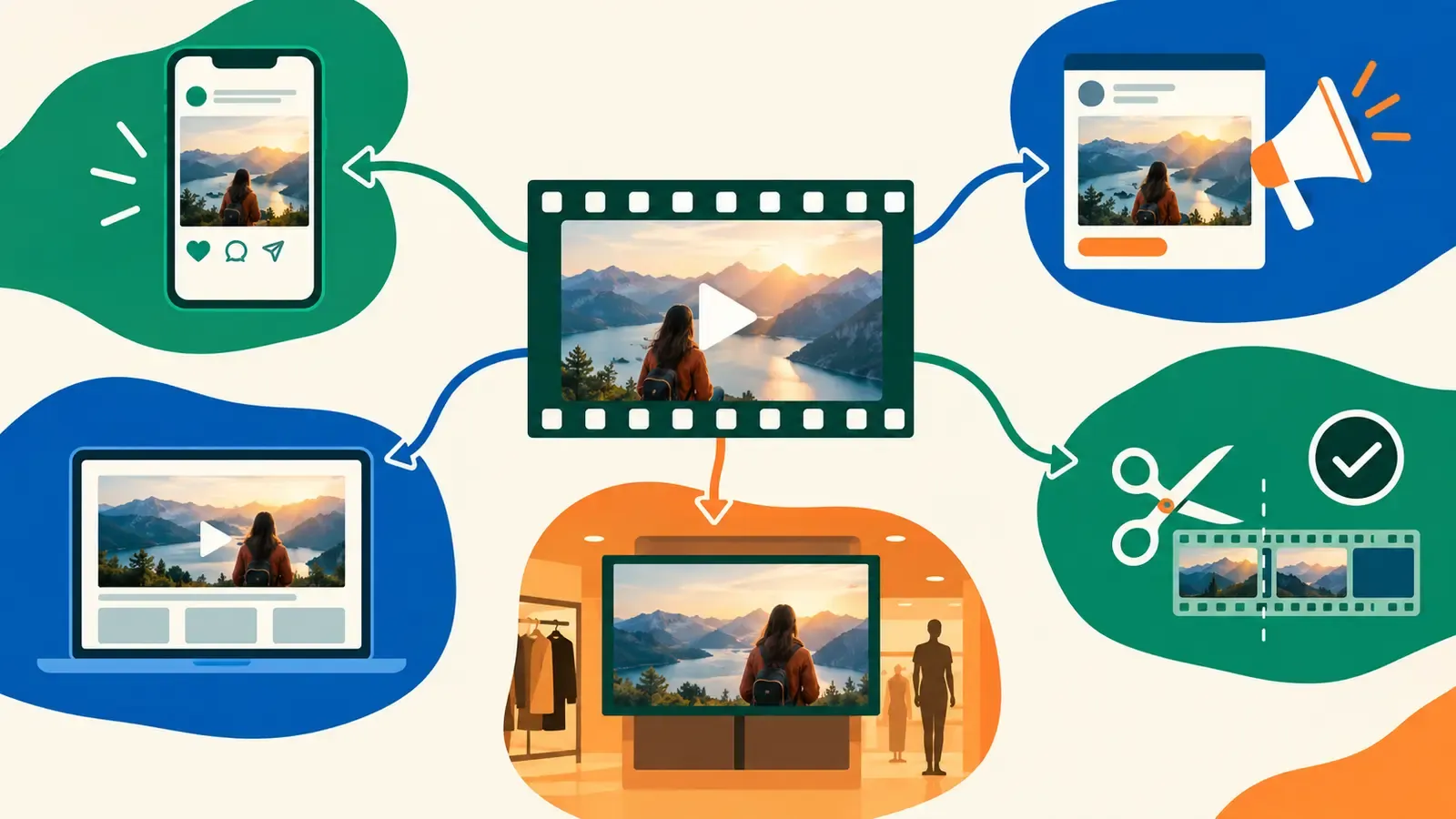
“One short video” is not a complete scope. The same file might live on a brand’s social account for a month, run as paid advertising for a year, appear on retailer screens, be cut into dozens of variants or sit in a global asset library indefinitely. Production effort matters, but usage changes the value and the creator’s future options.
This guide helps creators separate creation, delivery and permission. It is educational, not legal advice, and copyright rules differ by country and contract. The practical goal is to identify where, how, how long and by whom the work may be used before a camera turns on.
Separate production from usage
Price concepting, filming, editing, revisions and delivery as production work. That sounds simple until a real deadline compresses the choices. The practical move is to decide what the viewer must notice, what the creator must preserve, and what can safely vary. Write those three things beside the project before changing tools or adding polish. A visible decision is easier to review than an instinct remembered after publishing.
Describe usage as permission attached to defined channels, duration and purposes. Test the idea on the roughest useful version, not on a finished piece that is expensive to change. Watch it once as a viewer and once as an editor. During the viewer pass, note confusion without stopping. During the editor pass, trace each confusing moment back to a shot, sentence, transition or missing piece of evidence.
Avoid one vague fee that hides both labor and broad commercial value. There is a trade-off here. Consistency reduces effort and helps recognition, but too much consistency can hide weak thinking. Keep the part that carries meaning stable; vary the part that merely expresses it. This gives the workflow a backbone without turning every post into a duplicate of the last one.
Map the brand’s actual request
Ask whether the asset is for organic social, paid media, websites, email, retail or partners. A common failure is to optimize the visible symptom while leaving the cause untouched. Before acting, name the audience, the job they are trying to complete and the proof they receive. If those three elements do not agree, a more attractive edit may improve appearance while making the communication less honest.
Confirm countries, languages, campaign dates and intended audiences. Treat the result as evidence rather than a personal grade. Record what changed, the conditions around the change and what you expected to happen. That note lets you compare similar projects later without inventing a story around one unusually strong or weak result.
Identify whether the brand wants raw files, project files or only final exports. The checkpoint should be quick enough to survive ordinary production. If it requires a perfect studio, a large team or an hour of analysis for every post, it will disappear when work gets busy. Reduce it to a repeatable question, a visible artifact and a clear pass condition.
Define editing and derivatives
State whether cropping, captions, translations, voice replacement or new combinations are allowed. Ask a second person to explain what they think the piece promises before you tell them your intention. Their wording is useful even when you disagree. It reveals what the material communicates without the creator's private context, which is exactly the gap that viewers face.
Protect against edits that make the creator appear to say something not approved. That sounds simple until a real deadline compresses the choices. The practical move is to decide what the viewer must notice, what the creator must preserve, and what can safely vary. Write those three things beside the project before changing tools or adding polish. A visible decision is easier to review than an instinct remembered after publishing.
Require review for material claim changes and sensitive context where appropriate. Test the idea on the roughest useful version, not on a finished piece that is expensive to change. Watch it once as a viewer and once as an editor. During the viewer pass, note confusion without stopping. During the editor pass, trace each confusing moment back to a shot, sentence, transition or missing piece of evidence.
Set duration and renewal
Use a clear start, end and renewal process instead of “forever” by default. There is a trade-off here. Consistency reduces effort and helps recognition, but too much consistency can hide weak thinking. Keep the part that carries meaning stable; vary the part that merely expresses it. This gives the workflow a backbone without turning every post into a duplicate of the last one.
Decide what happens to live posts, cached ads and archived campaign pages after expiry. A common failure is to optimize the visible symptom while leaving the cause untouched. Before acting, name the audience, the job they are trying to complete and the proof they receive. If those three elements do not agree, a more attractive edit may improve appearance while making the communication less honest.
Price renewal from a documented baseline rather than renegotiating from memory. Treat the result as evidence rather than a personal grade. Record what changed, the conditions around the change and what you expected to happen. That note lets you compare similar projects later without inventing a story around one unusually strong or weak result.
Handle exclusivity precisely
Name the product category, competitors, territory and time period. The checkpoint should be quick enough to survive ordinary production. If it requires a perfect studio, a large team or an hour of analysis for every post, it will disappear when work gets busy. Reduce it to a repeatable question, a visible artifact and a clear pass condition.
Distinguish paid exclusivity from ordinary conflict avoidance during production. Ask a second person to explain what they think the piece promises before you tell them your intention. Their wording is useful even when you disagree. It reveals what the material communicates without the creator's private context, which is exactly the gap that viewers face.
Consider the opportunity cost when restrictions block future work. That sounds simple until a real deadline compresses the choices. The practical move is to decide what the viewer must notice, what the creator must preserve, and what can safely vary. Write those three things beside the project before changing tools or adding polish. A visible decision is easier to review than an instinct remembered after publishing.
Review ownership language carefully
Do not assume a commissioned work automatically transfers every right. Test the idea on the roughest useful version, not on a finished piece that is expensive to change. Watch it once as a viewer and once as an editor. During the viewer pass, note confusion without stopping. During the editor pass, trace each confusing moment back to a shot, sentence, transition or missing piece of evidence.
Distinguish a license from an assignment and understand work-made-for-hire language. There is a trade-off here. Consistency reduces effort and helps recognition, but too much consistency can hide weak thinking. Keep the part that carries meaning stable; vary the part that merely expresses it. This gives the workflow a backbone without turning every post into a duplicate of the last one.
Ask a qualified lawyer to review unfamiliar or high-value ownership terms. A common failure is to optimize the visible symptom while leaving the cause untouched. Before acting, name the audience, the job they are trying to complete and the proof they receive. If those three elements do not agree, a more attractive edit may improve appearance while making the communication less honest.
| Check | What to inspect |
|---|---|
| 1 | Do not assume a commissioned work automatically transfers every right. |
| 2 | Distinguish a license from an assignment and understand work-made-for-hire language. |
| 3 | Ask a qualified lawyer to review unfamiliar or high-value ownership terms. |
Build a transparent fee
Calculate production effort, overhead, revision risk and delivery complexity. Treat the result as evidence rather than a personal grade. Record what changed, the conditions around the change and what you expected to happen. That note lets you compare similar projects later without inventing a story around one unusually strong or weak result.
Add usage, exclusivity, rush and expanded deliverables as visible components. The checkpoint should be quick enough to survive ordinary production. If it requires a perfect studio, a large team or an hour of analysis for every post, it will disappear when work gets busy. Reduce it to a repeatable question, a visible artifact and a clear pass condition.
Present assumptions so a changed campaign can be repriced instead of argued about. Ask a second person to explain what they think the piece promises before you tell them your intention. Their wording is useful even when you disagree. It reveals what the material communicates without the creator's private context, which is exactly the gap that viewers face.
Document and deliver
Put scope, approvals, disclosure, rights, payment and cancellation terms in writing. That sounds simple until a real deadline compresses the choices. The practical move is to decide what the viewer must notice, what the creator must preserve, and what can safely vary. Write those three things beside the project before changing tools or adding polish. A visible decision is easier to review than an instinct remembered after publishing.
Deliver files through a named channel with version and acceptance records. Test the idea on the roughest useful version, not on a finished piece that is expensive to change. Watch it once as a viewer and once as an editor. During the viewer pass, note confusion without stopping. During the editor pass, trace each confusing moment back to a shot, sentence, transition or missing piece of evidence.
Track expiry and renewal dates so continued use is not discovered accidentally months later. There is a trade-off here. Consistency reduces effort and helps recognition, but too much consistency can hide weak thinking. Keep the part that carries meaning stable; vary the part that merely expresses it. This gives the workflow a backbone without turning every post into a duplicate of the last one.
Illustrative case study: the “social only” video that became an ad
A skincare brand asks a creator for one vertical demonstration “for social.” The first email sounds like an organic post, but the contract permits paid ads, website use, retailer distribution, editing and perpetual worldwide use. The production fee covers a day of work; the rights language covers a much larger commercial program.
The creator does not accuse the brand of bad faith. She returns a scope table with separate options: organic brand channels for a fixed term, paid social for a shorter campaign window, and an additional fee for retailer use. Material edits require approval, and renewal has a defined process. The brand chooses the narrower package that matches the actual launch.
The scenario does not invent market rates or revenue. Its lesson is that price follows scope. A creator cannot evaluate compensation until the agreement names the uses that compensation buys.
Keep a working record
A lightweight record makes this process teachable. Save the brief, first draft, decisive changes, permissions or source notes, final export and one paragraph about the outcome. For creators negotiating user-generated-content projects for brands, that record is more valuable than a folder full of unnamed versions because it shows why a choice was made.
Keep rejected options too, especially when they looked attractive but weakened the audience promise, exceeded the budget or created a rights problem. A short reason is enough. Over several projects, these notes reveal recurring friction and help separate a workflow problem from a one-off production accident.
Review the record after the agreed observation window. Mark what you know, what remains uncertain and what deserves another test. Do not rewrite the original hypothesis to make the outcome seem predictable. Honest notes protect the usefulness of both successful and disappointing work.
Choose the next useful step
Apply the framework to one active project before expanding it into a larger system. The first pass should expose a concrete decision, not create more administration. Read Build a Sponsorship Delivery System Before Pitching Brands. Read A Responsible AI Video Workflow From Prompt to Disclosure. Browse the AnyVid.io blog for related creator education. When reference media is involved, use only media you created, own, or have permission or another lawful right to save.
Frequently asked questions
What are usage rights in a UGC agreement?
They describe how the client may use the creative work: channels, purposes, territory, duration, editing and sometimes sublicensing. The exact legal effect depends on the contract and applicable law, so define the permission rather than relying on a casual phrase.
Is a commissioned UGC video automatically work made for hire?
Do not assume that. In the United States, work-made-for-hire status has specific legal requirements explained by the Copyright Office. Other countries use different rules. Review the actual agreement and obtain qualified legal advice for important ownership questions.
Should paid advertising cost more than organic use?
Many creators separate it because paid media can expand reach, duration and commercial value, but there is no universal rate. Price according to the scope, your business, opportunity cost and market context. The key is that paid use is identified before agreement.
What does perpetual usage mean?
It generally signals permission without a fixed end date, but the exact scope still depends on the wording. Perpetual rights can be far broader than a short campaign. Understand channels, territory, editing and transfer provisions before accepting.
Can a brand edit my delivered video?
Only as the agreement permits. Define routine changes such as cropping or captions separately from material edits that alter claims, voice or context. Consider approval rights where an edit could affect reputation, accuracy or disclosure.
Was this article helpful?
Tell us what worked so we can improve future content.